Strategic Visual Communication: Leveraging Bacterium Outline Clipart Design for Brand Clarity
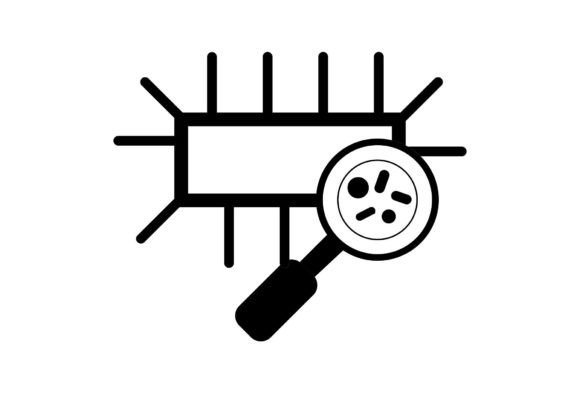
In the crowded digital landscape, visual efficiency is not merely an aesthetic preference; it is a operational necessity. When communicating complex scientific or biological concepts, clarity often gets lost in translation. This is where the Bacterium Outline Clipart Design serves as a critical tool for professionals who need to convey information quickly and accurately. Whether you are developing educational materials for a biology curriculum, designing marketing collateral for a biotech startup, or creating user interface elements for a health-focused mobile application, the right visual asset can significantly reduce cognitive load for your audience.
The appeal of this specific design lies in its minimalism. By stripping away unnecessary textures and focusing on the essential structural form of a bacterium, the outline format allows for versatile integration across various media. It is not just an image; it is a functional component of your communication strategy. Understanding how to deploy this asset effectively requires a shift in perspective from viewing clipart as mere decoration to recognizing it as a strategic element of brand positioning and user experience design.
The Strategic Value of Minimalist Iconography
Minimalism in design is often misunderstood as simplicity for simplicity’s sake. In reality, effective minimalism is about maximizing signal-to-noise ratio. The Bacterium Outline Clipart Design achieves this by providing a recognizable symbol that does not compete with surrounding text or other graphical elements. For entrepreneurs and marketers, this means your core message remains the focal point, while the icon serves as a quick visual anchor.
Consider the psychological impact of clean lines and open space. In professional contexts, such as medical brochures, corporate reports, or academic presentations, overly detailed or cartoonish illustrations can undermine credibility. A textured, realistic image might be appropriate for a high-resolution poster, but it often fails when scaled down for mobile interfaces or favicons. The vector-based nature of this outline design ensures that it retains its integrity regardless of size, maintaining a professional and authoritative tone.
Furthermore, minimalist icons facilitate faster processing speeds for the human brain. When a user scans a website or a social media feed, they are looking for patterns and familiar shapes. A standardized bacterium outline acts as a universal signifier for "biology," "health," "microbiology," or "science." By using a consistent visual language, you reduce the time it takes for your audience to understand the context of your content, thereby improving engagement metrics and retention rates.
Versatility Across Digital and Print Media
One of the primary challenges in modern content creation is maintaining visual consistency across disparate platforms. A design that looks striking on a desktop monitor may appear cluttered on a smartphone screen or pixelated when printed on business cards. The Bacterium Outline Clipart Design addresses this challenge through its multi-format availability. Included in the package are JPG, PNG, SVG, EPS, and AI files, each serving a distinct purpose in your workflow.
- JPG and PNG (512x512px, 300 dpi): These raster formats are ideal for immediate use in web banners, social media posts, and standard printing tasks. The 300 dpi resolution ensures that when printed on paper for brochures or info cards, the edges remain crisp and professional.
- SVG, EPS, and AI: These vector formats are indispensable for scalable design. Whether you are resizing the icon for a mobile app button or enlarging it for a trade show banner, vector files allow for infinite scaling without loss of quality. This flexibility is crucial for brands that need to adapt their visual assets to various touchpoints without commissioning new designs for every instance.
For web developers and UI/UX designers, the SVG format is particularly valuable. It allows for CSS styling, meaning you can change the color of the bacterium outline dynamically to match your brand palette or to indicate interactive states (such as hover effects) without needing multiple image files. This not only streamlines the development process but also improves page load times, contributing to better SEO performance and user satisfaction.
Enhancing Brand Positioning and Customer Experience
Your choice of imagery reflects your brand’s values. Using a generic, low-quality clipart can signal a lack of attention to detail, potentially eroding trust with your audience. Conversely, selecting a refined, aesthetic vector symbol like this bacterium outline demonstrates a commitment to quality and professionalism. It suggests that your organization values precision and clarity—traits that are highly desirable in the healthcare, education, and scientific sectors.
When integrating this design into your customer journey, consider the context in which it will be viewed. On a landing page for a probiotic supplement, the icon can serve as a subtle reinforcement of the product’s scientific basis. In an educational app, it can function as a navigation element, guiding students to modules related to microbiology. In each case, the icon is not just present; it is performing a specific function that supports your broader business goals.
Moreover, consistent use of such icons helps build brand recognition. Over time, your audience begins to associate the specific style of your visual assets with your brand identity. This cumulative effect strengthens brand equity and differentiates you from competitors who may rely on disjointed or inconsistent visual strategies.
Risks of Context-Free Usage and How to Avoid Them
While the Bacterium Outline Clipart Design is a powerful tool, its effectiveness is contingent on thoughtful application. One common pitfall is using visual assets without a clear strategic intent. Dropping an icon into a layout simply to fill space can create visual clutter and distract from the main message. Before incorporating this design, ask yourself: What purpose does this icon serve? Does it clarify the accompanying text? Does it guide the user’s eye?
Another risk is mismatched styling. If your brand guidelines dictate a bold, colorful, and playful aesthetic, a stark, minimalist black outline might feel disconnected. Similarly, if your design system relies on filled, solid icons, an outline version may appear incomplete or inconsistent. It is essential to evaluate how this specific asset fits within your existing visual hierarchy. You may need to adjust stroke weights, colors, or surrounding whitespace to ensure harmonious integration.
Additionally, consider cultural and contextual sensitivities. While a bacterium is a neutral scientific subject, associations with disease or contamination can arise depending on the surrounding content. Ensure that the context in which you use the icon aligns with the intended message. For instance, using a bacterium icon in a hygiene campaign requires careful messaging to avoid inducing unnecessary anxiety, whereas in an educational context, it can be presented as a fascinating subject of study.
Practical Implementation Guidelines
To maximize the return on investment for this digital asset, follow these practical steps during implementation:
- Audit Your Current Assets: Review your existing library of images and icons. Identify gaps where a scientific or biological symbol is needed. Determine if the current visuals are meeting your clarity and branding standards.
- Define Use Cases: List the specific platforms and materials where the Bacterium Outline Clipart Design will be used. This might include website headers, mobile app interfaces, printed catalogs, or social media graphics. Having a clear list helps in planning the necessary file formats and resolutions.
- Test for Scalability: Before finalizing your design, test the icon at various sizes. Ensure it remains legible and visually balanced when scaled down to 16x16 pixels for a favicon or enlarged for a presentation slide. Use the vector files (SVG, EPS, AI) for this testing phase.
- Maintain Consistency: Establish guidelines for how the icon is used. Define acceptable color variations, minimum clear space around the icon, and prohibited modifications. This ensures that all team members and external partners use the asset correctly, preserving brand integrity.
- Evaluate Performance: After deployment, monitor user engagement and feedback. Are users interacting with the sections where the icon is used? Is the message being conveyed more clearly? Use these insights to refine your visual strategy over time.
In conclusion, the Bacterium Outline Clipart Design is more than a simple graphic; it is a strategic resource for enhancing communication, reinforcing brand identity, and improving user experience. By approaching its use with intentionality and adhering to best practices in design and implementation, you can leverage this asset to achieve better outcomes in your professional projects. Visit our shop to explore more modern digital icon design elements that can further elevate your visual communication strategy.